
Last updated November 20, 2026
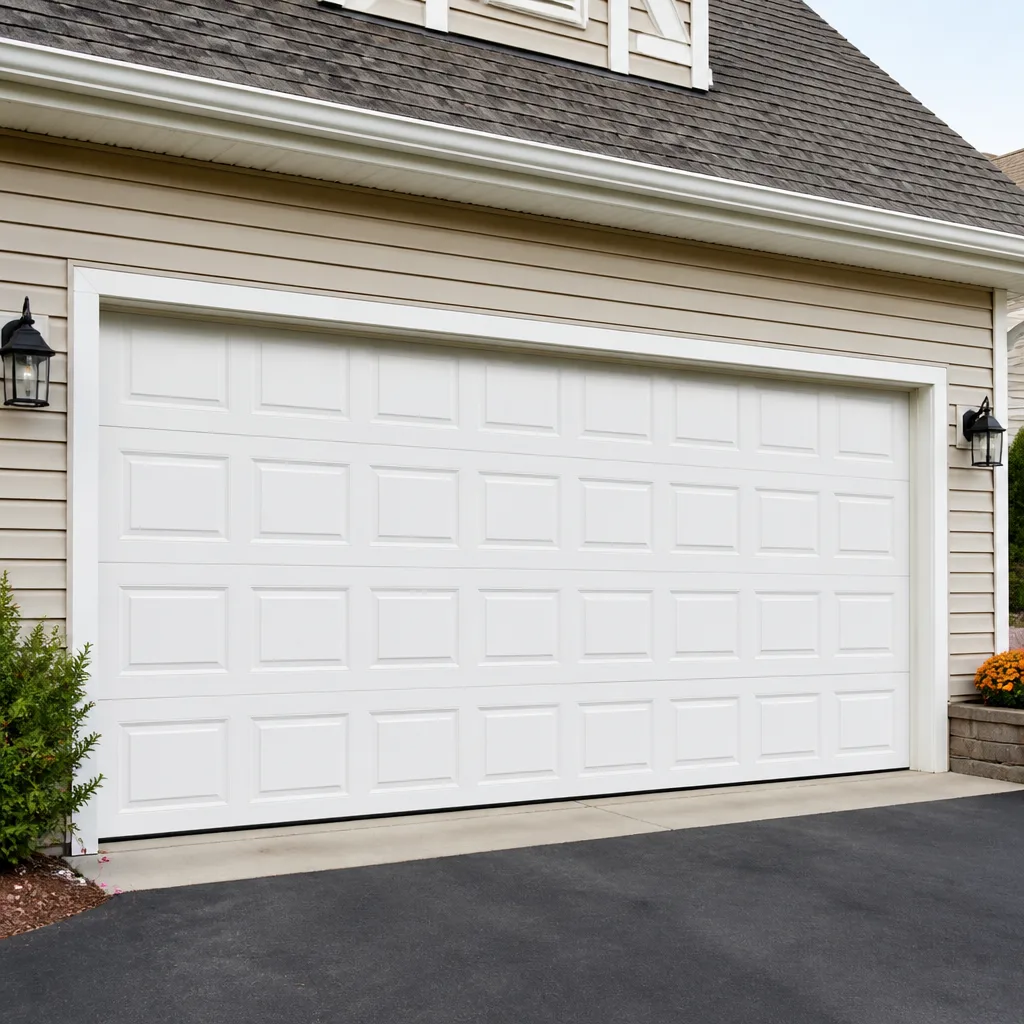 Raised-panel steel
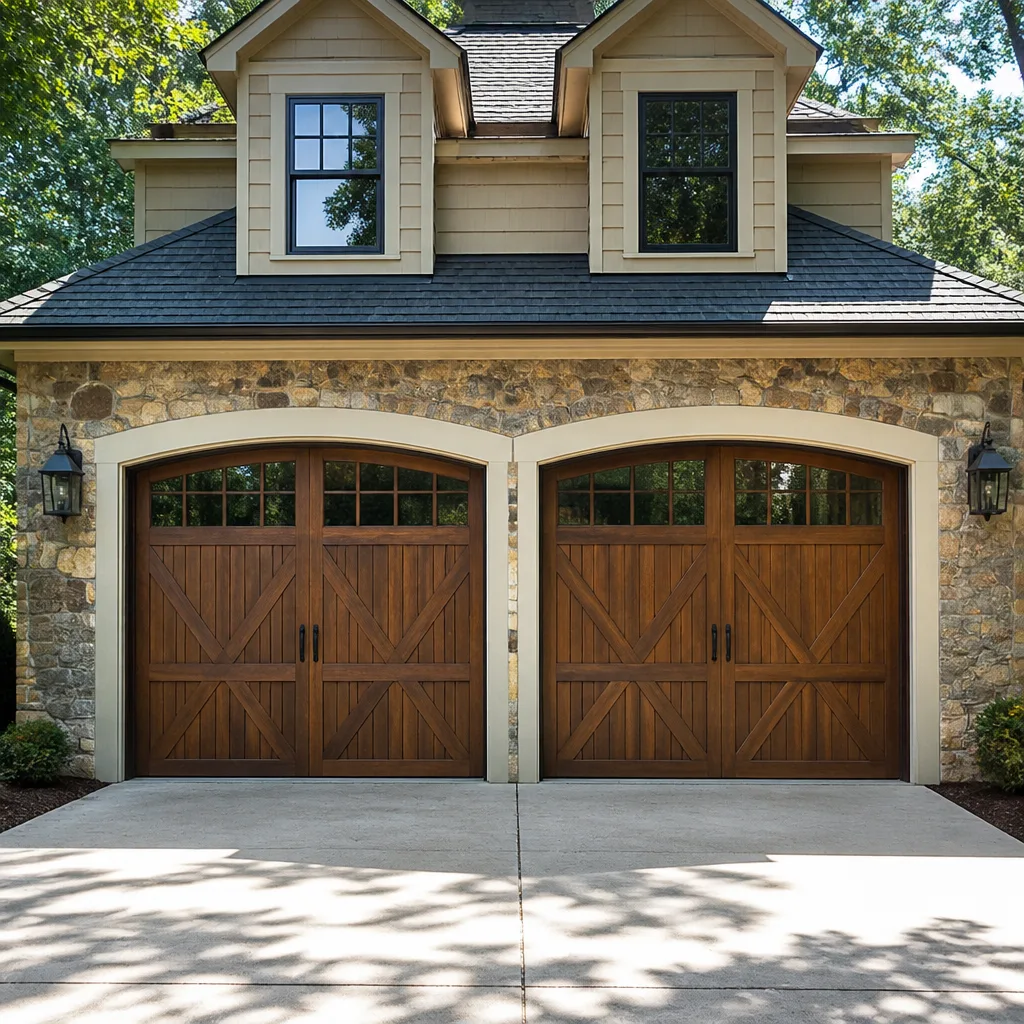 Carriage house
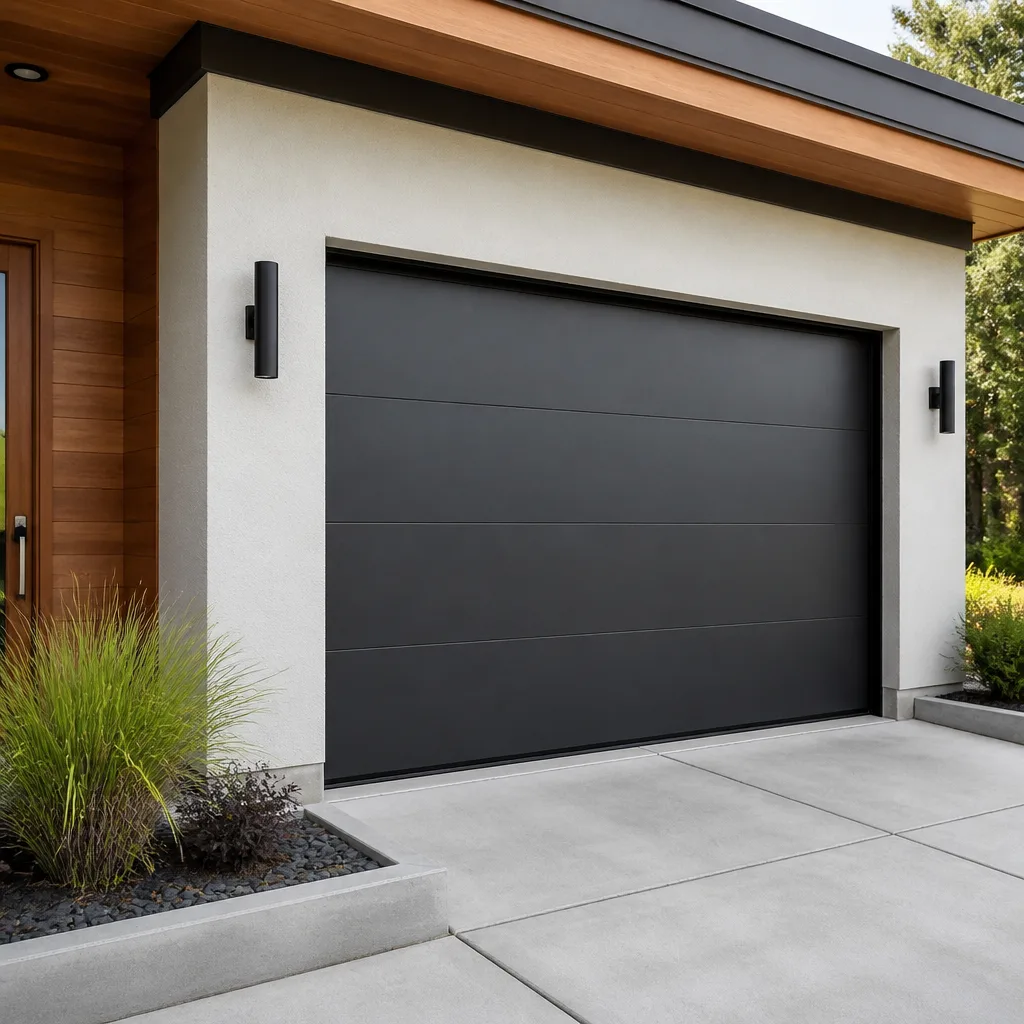 Modern flush
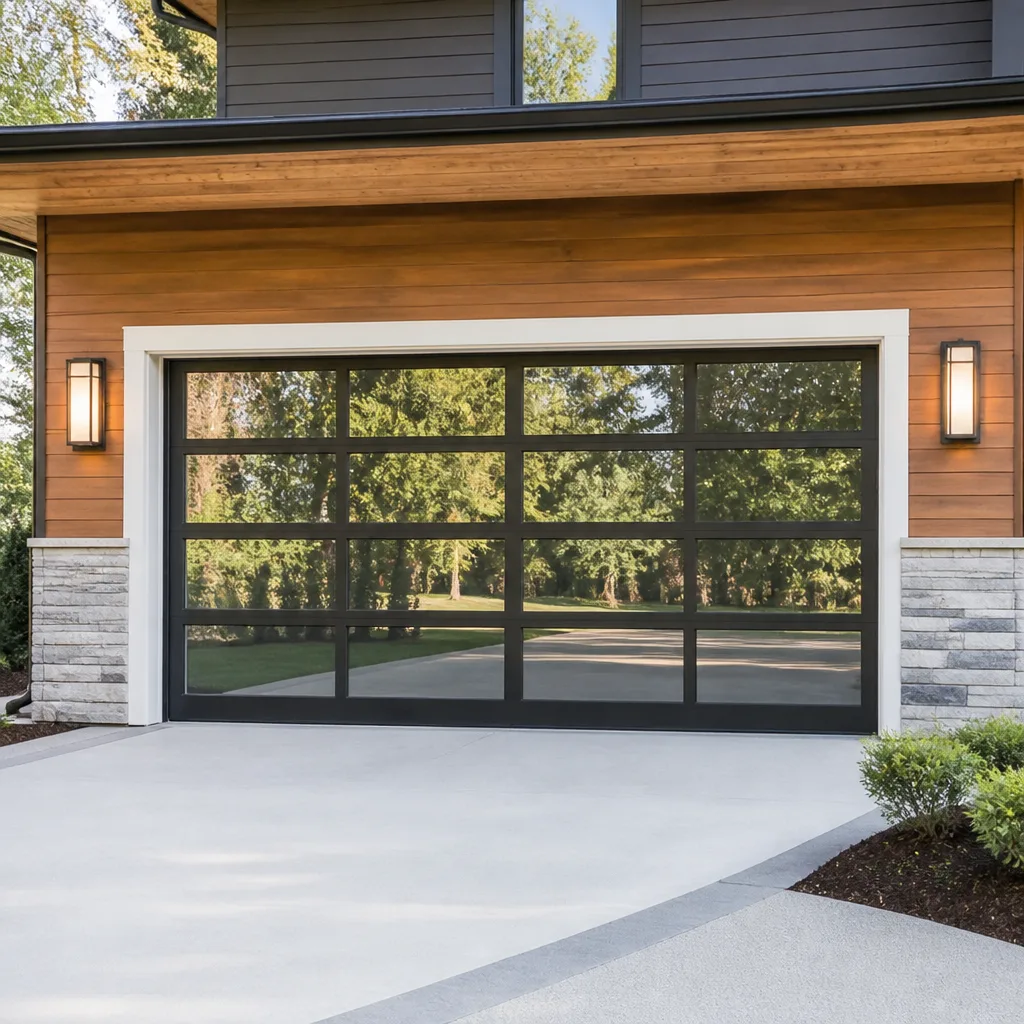 Full-view glass
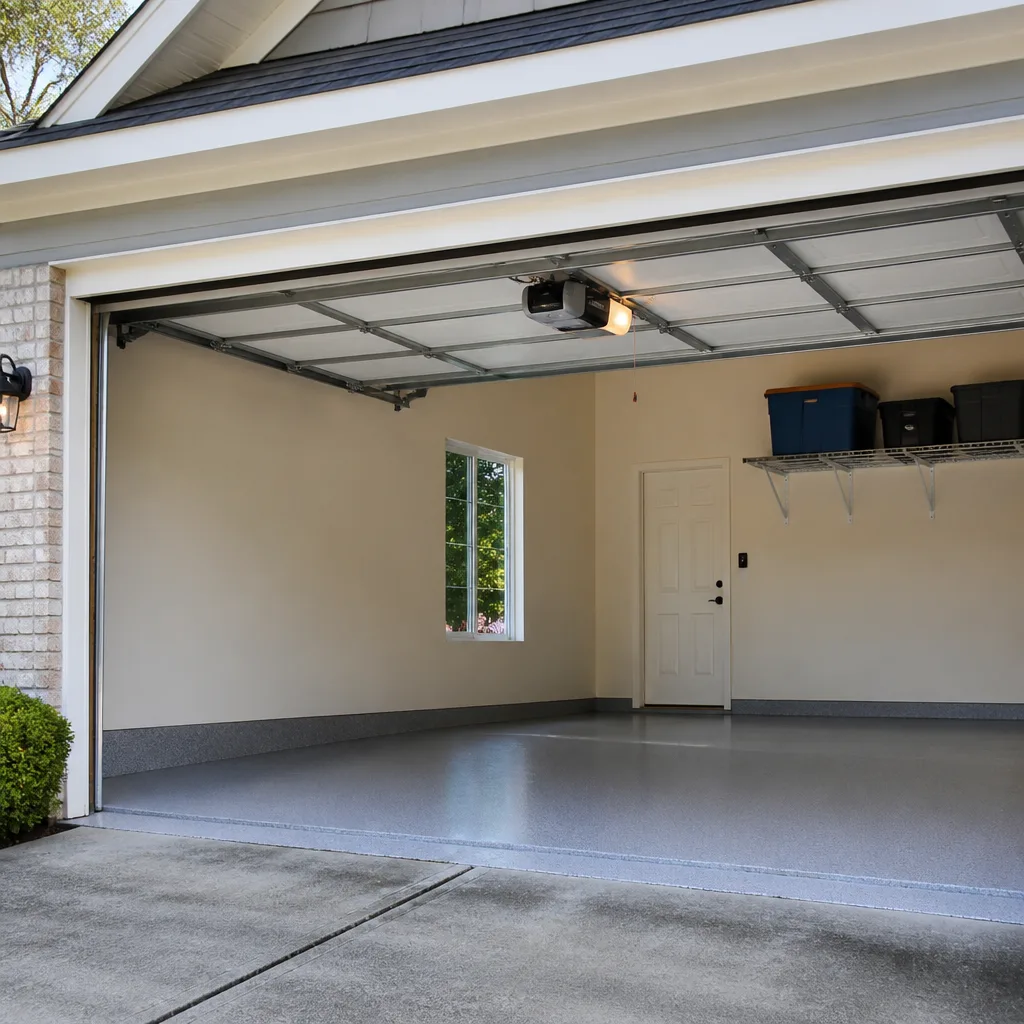 LiftMaster openers
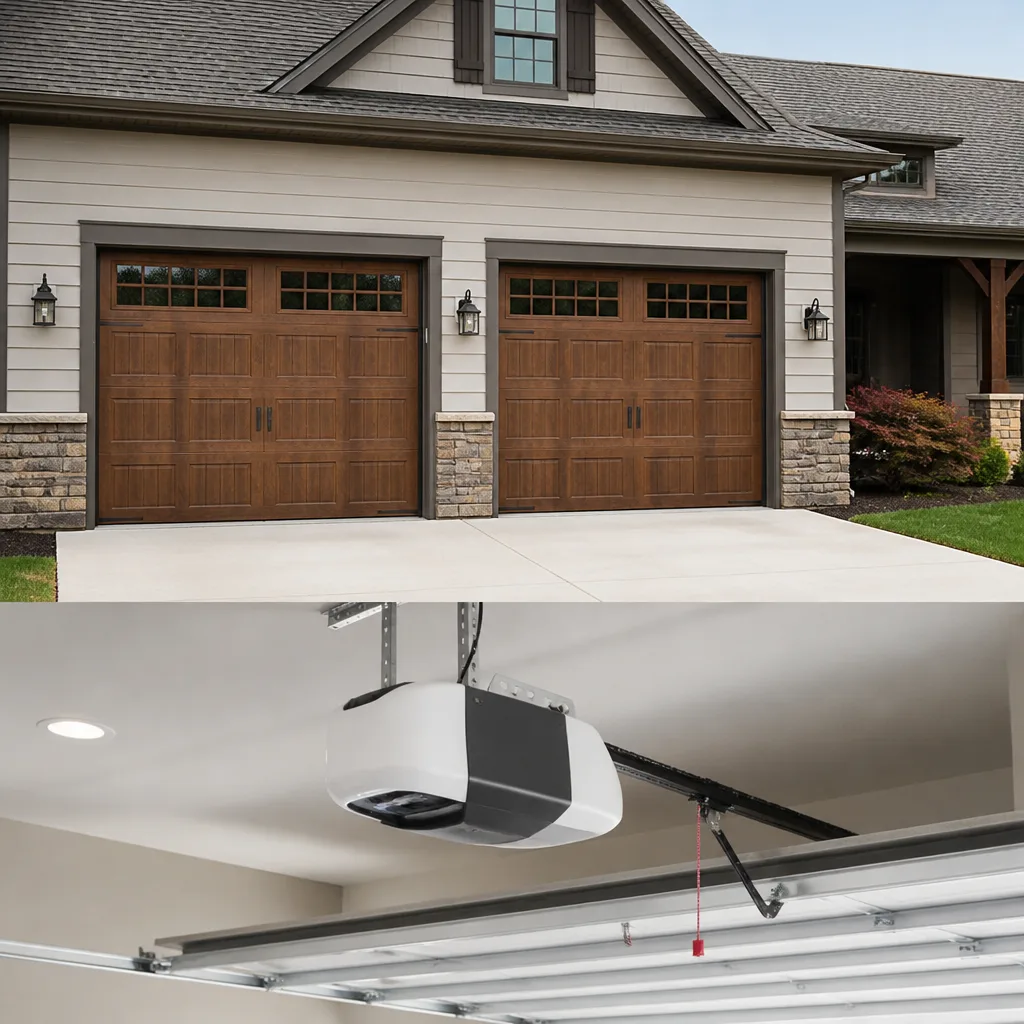 Chamberlain openers
Full 25-point door and opener safety check with every visit - springs, cables, rollers, tracks, and your LiftMaster or Chamberlain opener included
You get a price before we start. It does not change when the pro arrives.
Get your free estimateHow to Hire a Garage Door Contractor in Grove City: A Step-by-Step Guide
A contractor who replaces garage doors twice a month handles the job differently than one who does it twice a year, and you can tell which one you’re talking to in the first minute of a phone call if you know what to ask. Most homeowners in Grove City focus on the wrong risk. They worry about hiring someone uninsured and miss the far more common problem: hiring a general handyman or an HVAC company that “also does doors” and only discovering the gap when a misdiagnosed spring order stretches a single visit into two weeks of waiting. This guide gives you the five diagnostic questions that separate specialists from generalists, plus what to check in a quote, a warranty, and a phone call before anyone pulls into your driveway.
Quick Answer
To hire a garage door contractor in Grove City, ask five questions before you book: what brands they service, how they diagnose a spring versus an opener problem, whether they keep common parts on hand or order after the diagnosis, what their written warranty covers, and how long their technicians have worked on doors specifically. A dedicated garage door specialist answers all five without hesitation, gives you a written quote before any work starts, and can usually tell you the fix over the phone. A generalist stumbles on the brand and parts questions, which is your signal to keep looking.
Styles & brands we work with
- Raised-panel steel
- Carriage house
- Modern flush
- Full-view glass
- LiftMaster openers
- Chamberlain openers
Table of Contents
- Why a Dedicated Garage Door Specialist Beats a Generalist
- The Five Diagnostic Questions to Ask Before Anyone Visits
- Why “Licensed and Insured” Isn’t Enough Vetting in Ohio
- Reading a Quote: Line Items That Should Always Be There
- Parts on Hand Versus Parts Ordered: The Same-Day Difference
- What a Real Labor and Parts Warranty Should Say
- Green Flags: What a Good Grove City Contractor Sounds Like
- Red Flags That Should End the Conversation
Why a Dedicated Garage Door Specialist Beats a Generalist
A garage door is a balanced mechanical system: springs, cables, tracks, rollers, hinges, and a motor that all have to work together. When one part fails, the symptom rarely points cleanly at the cause. A door that won’t close could be a snapped spring, a misaligned track, a failing safety sensor, or a worn gear inside the opener. A contractor who mostly installs doors has seen that exact set of symptoms hundreds of times and knows where to look first. A generalist starts fresh every time.
That difference shows up in three ways homeowners feel immediately:
- Faster diagnosis. A specialist narrows the problem to panels, tracks, the opener, or the spring system in a short visit instead of scheduling a return trip once they think about it.
- Correct parts the first time. Garage doors run on a handful of common components. A dedicated team keeps the ones that fail most often on hand instead of ordering them after the diagnosis and asking you to wait.
- Safer work. High-tension springs and cables store enormous force. A technician who handles them weekly treats them with the respect they demand. A handyman who touches one a few times a year is guessing.
Here in Grove City, most homes have a garage that’s the primary way in and out. When the door quits, the whole household feels it, and the vehicle may be trapped inside. That’s the wrong moment to be someone’s practice job. Garage doors are all we do, and that focus is the reason we can tell you over the phone that a Wayne Dalton door that opens three feet and stops is almost certainly a broken spring, not a motor problem.
The brands matter too. We work on LiftMaster, Chamberlain, Genie, Clopay, Amarr, Wayne Dalton, Craftsman, and Raynor equipment. That range covers the smart Wi-Fi openers in newer builds and the older Craftsman units still running in plenty of Grove City garages. A generalist can’t say the same. Whether it’s a modern LiftMaster or a legacy system, the parts and the know-how should already be there.
The Five Diagnostic Questions to Ask Before Anyone Visits
These five questions do the vetting for you. Ask them on the phone before you book. A specialist answers each one directly. A generalist hedges, changes the subject, or promises to “take a look and see.”
- “Which brands do you service regularly?” A specialist names specific manufacturers. If the answer is “all of them” with no detail, press once more. You want to hear a real list, because brand familiarity means correct part numbers and fewer surprises.
- “My door opens partway and stops. What do you think it is?” A snap diagnosis over the phone. A specialist will name the likely culprit (usually a broken spring on one side) and tell you what it means for safety and cost. A generalist can’t commit.
- “Do you keep common springs and opener parts on hand, or do you order after you look?” This single answer predicts whether you’re looking at a same-day repair or a week of waiting.
- “What does your labor warranty cover, and for how long?” A real answer involves specifics about parts versus labor. You want to hear a clear division, not a vague “we stand behind our work.”
- “How many years have your technicians worked on garage doors specifically?” Technician experience is what predicts a clean repair. Our technicians have up to 10 years of experience with door mechanics, openers, and spring systems.
If you get crisp answers to all five, you’re talking to a specialist. Two or three vague answers, and you’re talking to someone who’ll figure it out on your time.
Why “Licensed and Insured” Isn’t Enough Vetting in Ohio
Ohio doesn’t license garage door contractors as a separate trade the way it licenses electricians or plumbers. That’s the detail most homeowners miss. There’s no single state credential that says “this person is qualified to work on high-tension springs,” so a contractor’s license or insurance certificate tells you they’re a legitimate business, not that they know a torsion spring from an extension spring. You have to verify specialist skill yourself.
Insurance still matters, and you should confirm it. The local professional we connect you with is licensed and insured as their state requires, and you should ask for that documentation before work starts. But treat it as the floor, not the ceiling. The facts you actually want to gather:
- Proof of general liability insurance. Ask for the certificate. It should be current.
- Workers’ compensation coverage. If a technician is injured on your property and the company isn’t covered, the problem can land on you. Ask.
- Specialist references. Since the state credential doesn’t exist, ask how many door and opener jobs they handle and which brands they service most. Detail here is the real proof.
- Written quote policy. A serious contractor puts the price in writing before work begins. No exceptions.
None of this is a knock on Ohio’s system. It simply means the burden of checking specialist credentials falls on you, and the fastest proxy is the brand-specific knowledge. Ask whether they work on Clopay panels or Raynor openers. A contractor who lights up at those names has the training you want.
Reading a Quote: Line Items That Should Always Be There
A written quote from a real garage door contractor is itemized. You should be able to see what part is being replaced, what labor is involved, and what the total comes to before anything is unscrewed. Whether it’s a garage door spring repair or a motor replacement, the estimate structure is the same. If a bid arrives as one lump number, ask for the breakdown.
Every quote should show these line items:
- The specific part or parts. “Torsion spring, one spring” or “opener gear and sprocket,” not “springs.” Spring pricing is per spring, so a matched pair is usually quoted as two units because they’re replaced together.
- Labor, itemized separately. You want to see the labor line clearly, not blended into the parts cost.
- The warranty terms in writing. Both parts and labor, stated in the quote itself.
- Any needed disposal or haul-away. Old springs and motor units don’t vanish. If there’s a charge, it should be on the page.
- A stated total. The number you’ll actually pay. The written estimate sets the final price, and the price is quoted and agreed before any work starts.
Here’s where suspiciously low bids give themselves away. A quote that comes in far under everyone else is almost always leaving something out: the second spring in a matched pair, the labor to realign a track after the spring swap, or the warranty. Sometimes it’s leaving out the correct part entirely, substituting a cheaper spring rated for fewer cycles. When a Grove City homeowner tells us they got a bid that seemed too good, the missing line is nearly always one of those. Ask what’s not included, and watch the price climb back to where it should be.
For context, a typical spring repair in the Grove City market usually runs somewhere in the low hundreds for a single spring, with a matched pair costing roughly twice that. An opener repair normally lands in a similar range, and a full door mechanism repair depends on what’s failed. These are estimates for planning, not exact quotes. The written estimate you receive is what you’ll pay.
Parts on Hand Versus Parts Ordered: The Same-Day Difference
This is the detail that separates a same-day repair from a week of waiting, and almost no homeowner thinks to ask. When a contractor keeps common parts on hand, the diagnosis and the repair happen in one visit. When they order after the diagnosis, you’re looking at a second appointment days later, and your car may still be parked in the driveway the whole time.
The parts that fail most on residential doors are predictable:
- Torsion and extension springs in common residential sizes
- Rollers and hinges
- Opener gears, sprockets, and drive belts
- Safety sensors and photo-eye brackets
- Weather seals and bottom brackets
A dedicated specialist stocks these because they handle them constantly. A generalist, or a company that mostly installs new doors, orders as needed because a garage door repair is a small slice of their business. Ask the direct question: “If you diagnose a broken spring, can you fix it today?” A specialist who knows their inventory answers fast. A company that has to “check stock” before every job is telling you something about their volume.
We aim for most repairs to be completed in a single visit, and that’s only possible because the parts are on hand when the technician arrives. It’s also why brand familiarity matters so much. A garage door opener repair on a LiftMaster unit and one on an older Craftsman need different parts, and knowing which ones before the truck rolls saves everyone a return trip.
What a Real Labor and Parts Warranty Should Say
A good warranty separates labor from parts, gives each a defined coverage period, and explains exactly what happens if the repair fails. Vague language like “we stand behind our work” protects nobody. The specific terms protect you, and you should see them in writing on the quote, not just hear them on the phone.
What the warranty language should cover:
- A stated labor warranty period. A clear number of days or months on the workmanship, in writing.
- A separate parts warranty. The part has its own coverage, often different from the labor.
- A clear “fails within the period” clause. What happens if the same repair breaks inside the coverage window? The answer should be a return visit at no labor charge, spelled out, not implied.
- What voids it. Usually another company touching the door or a separate problem causing a new failure. This should be stated plainly.
- The name of the parts manufacturer, where relevant. A spring rated for more cycles has a longer expected life. Ask what part brand is being installed.
If a repair fails within the warranty window, the specific language that protects you is a written promise of a no-charge return visit for the labor, plus the parts coverage terms. Your move is to call and reference the written terms, not rely on a verbal promise. Get it on the quote before anyone starts work, and you won’t have to argue later. A real garage door specialist hands you this without being asked. For more on what a full repair involves, see our garage door repair page.
Green Flags: What a Good Grove City Contractor Sounds Like
You’ll know a dedicated garage door specialist within a minute of the phone call. The signs are consistent, and they have nothing to do with slick marketing.
- They diagnose over the phone. A specialist can often name the likely problem from your description and tell you what it means for cost and safety before anyone drives out.
- They name specific brands. LiftMaster, Chamberlain, Genie, Clopay, Amarr, Wayne Dalton, Craftsman, Raynor. Specifics signal real familiarity, not a memorized list.
- They quote you a range and commit to a written estimate. A number in writing before work starts, with the promise that the written estimate is the price.
- They treat springs with caution. They’ll tell you not to force a door with a broken spring and explain why. That safety instinct is a specialist trait.
- They’ll cover both new and older setups. A Wi-Fi LiftMaster is a different job from a legacy Craftsman, and a good contractor handles both without hesitation.
If your conversation sounds like this, you’re onto something good. If it doesn’t, keep looking, even if the schedule is inconvenient. A couple of days’ wait for the right contractor beats a rushed repair from the wrong one. Our technicians have up to 10 years of experience, and that tenure shows up in how they explain the job before they start it.
Red Flags That Should End the Conversation
Walk away when any of these show up. Each one has cost a homeowner more than the repair itself.
Pressure to decide on the spot. A discount that expires today, or an insistence on a decision before you’ve thought it through, is a sales technique, not a service. A real contractor is happy to give you a written quote and let you compare.
A price far below everyone else. As covered above, the missing line is usually a part, the warranty, or both. Ask what’s excluded and the price corrects itself.
No written quote before work. If they won’t put the number on paper first, the invoice becomes a negotiation after the fact. Walk away.
Vagueness on brand and parts. If they can’t tell you which parts they’re installing or which brands they handle, the parts will be whatever’s cheap and available at that moment.
Offering to skip the safety checks. A contractor who’ll disable a safety sensor or force a broken door to “get it working” for now is putting you at risk. The photo-eye system and the spring balance exist for a reason.
Refusing to itemize. One lump total with no breakdown hides whether the labor or the parts make up the cost. You should see the line items.
“We do it all” positioning. A company that lists a dozen services treats garage doors as a sideline. That’s the exact profile that turns a one-visit repair into a two-week wait when the part is wrong.
Common Mistakes to Avoid
- Assuming “licensed and insured” means “qualified.” Ohio doesn’t license garage door specialists as a distinct trade, so the state credential isn’t a proof of skill. Ask the diagnostic questions instead.
- Hiring the handyman who “can give it a go.” A generalist touching a high-tension spring is a serious injury risk and a likely repeat failure. Springs demand a specialist.
- Skipping the parts question. Not asking whether parts are on hand means discovering on the second visit that they’re not. Ask before you book.
- Accepting a verbal quote. The written estimate is the price. Without one, the invoice is whatever shows up later. Get it in writing.
- Choosing by price alone. The lowest bid usually leaves out the second spring, the warranty, or the correct part. Compare line items, not just totals.
- Ignoring the brand question. A contractor unfamiliar with your Raynor or Wayne Dalton door may order the wrong part, and you’ll be the one waiting for the reorder.
- Not confirming the warranty terms in writing. A labor warranty that lives only in a phone conversation won’t help if the same repair fails later. Get the specific language on the quote.
See the difference
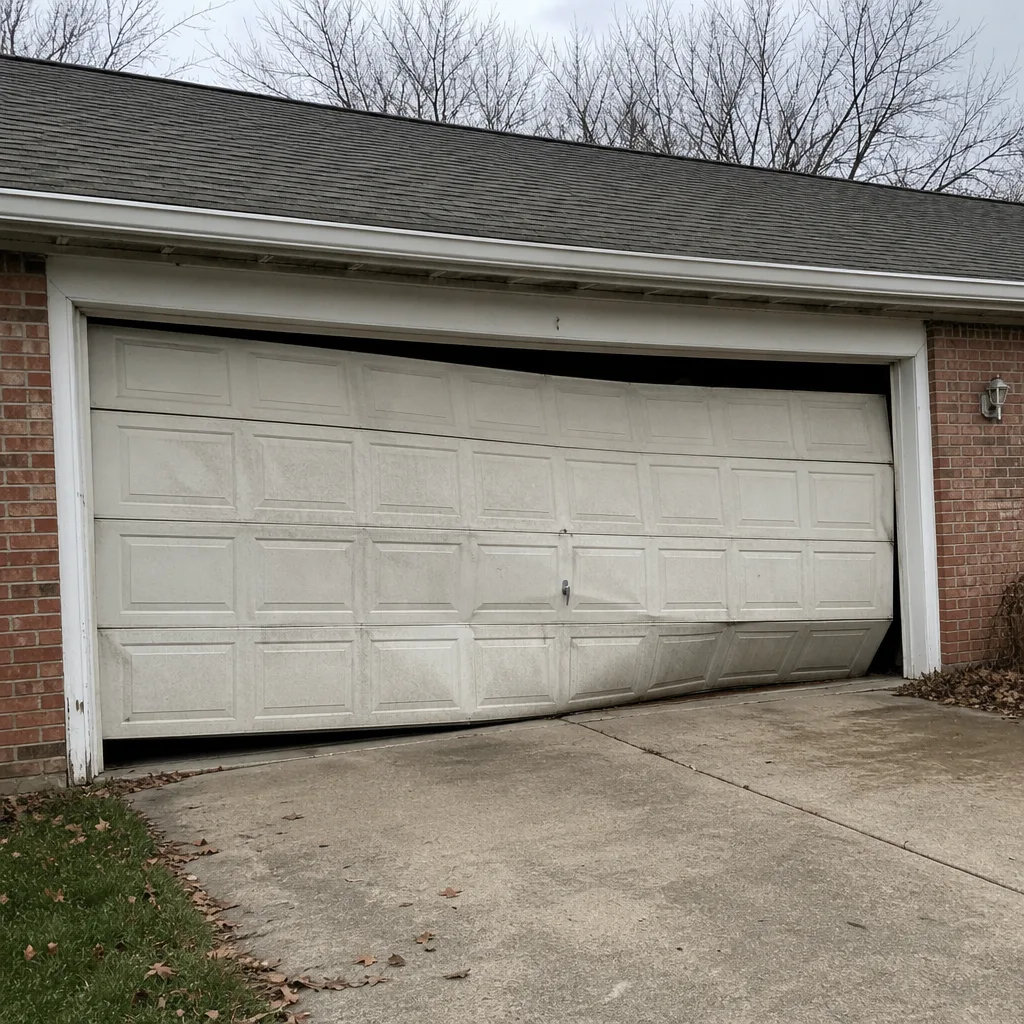 Before
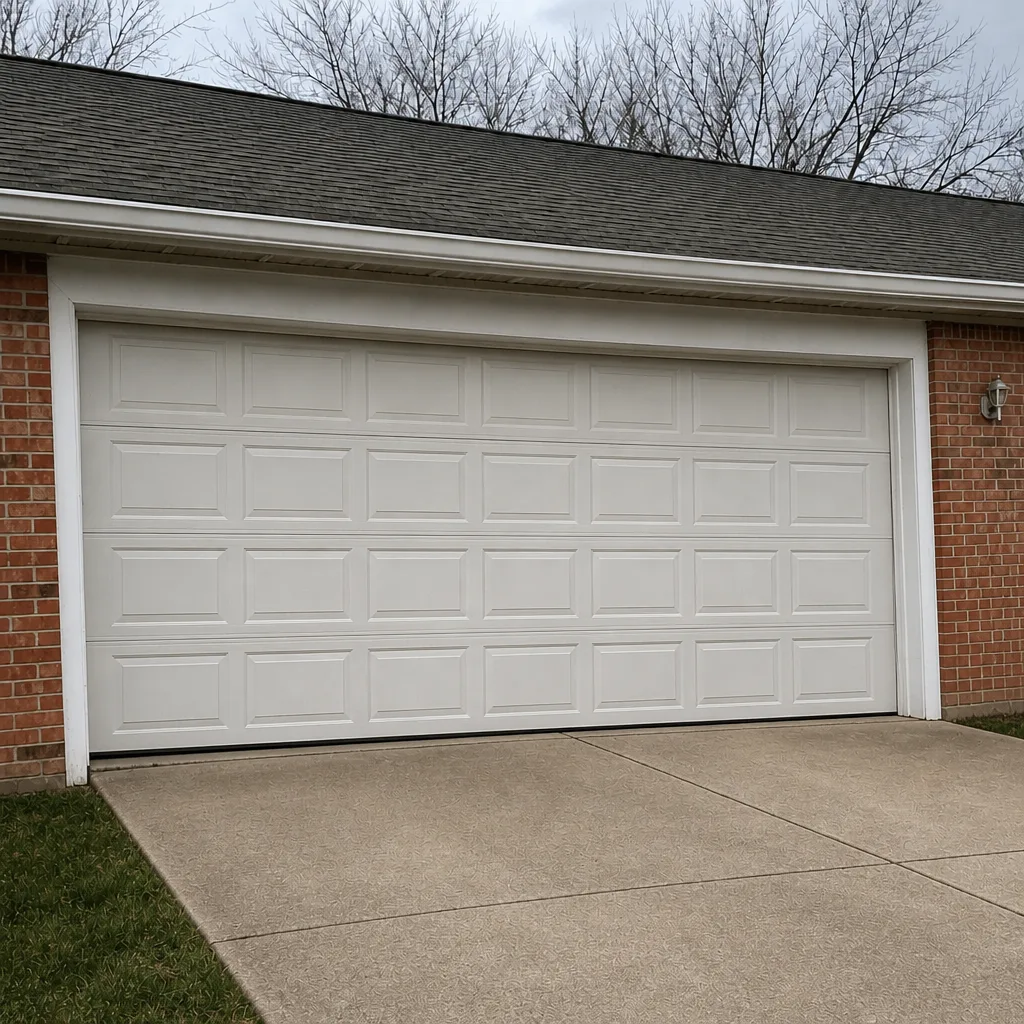 After
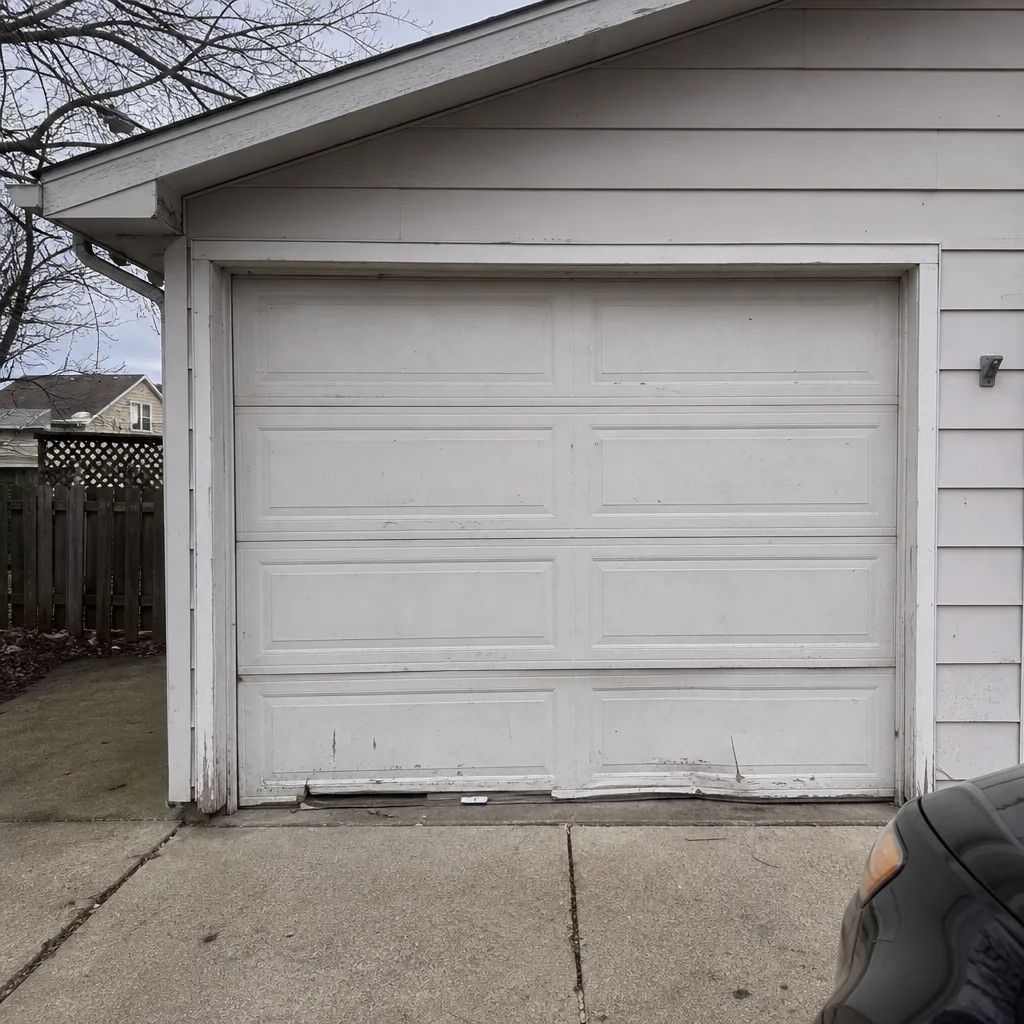 Before
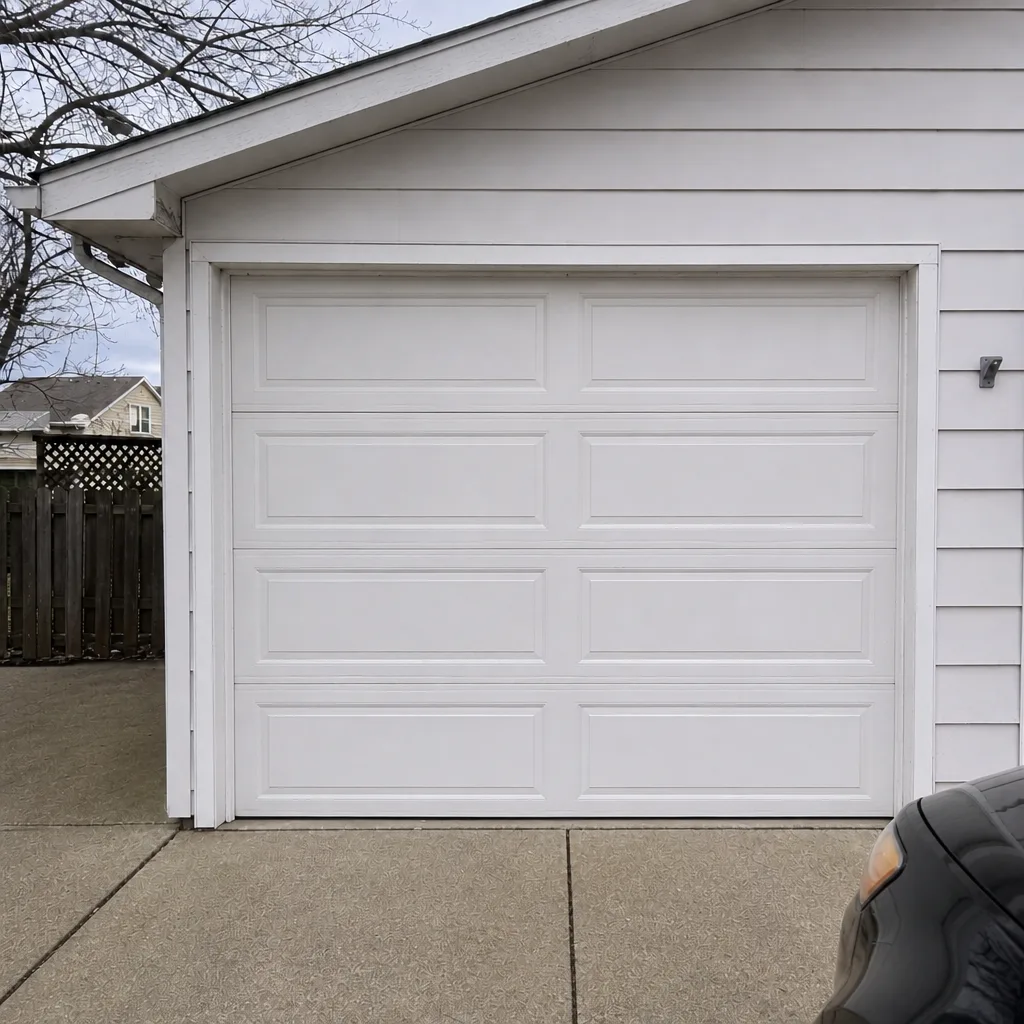 After
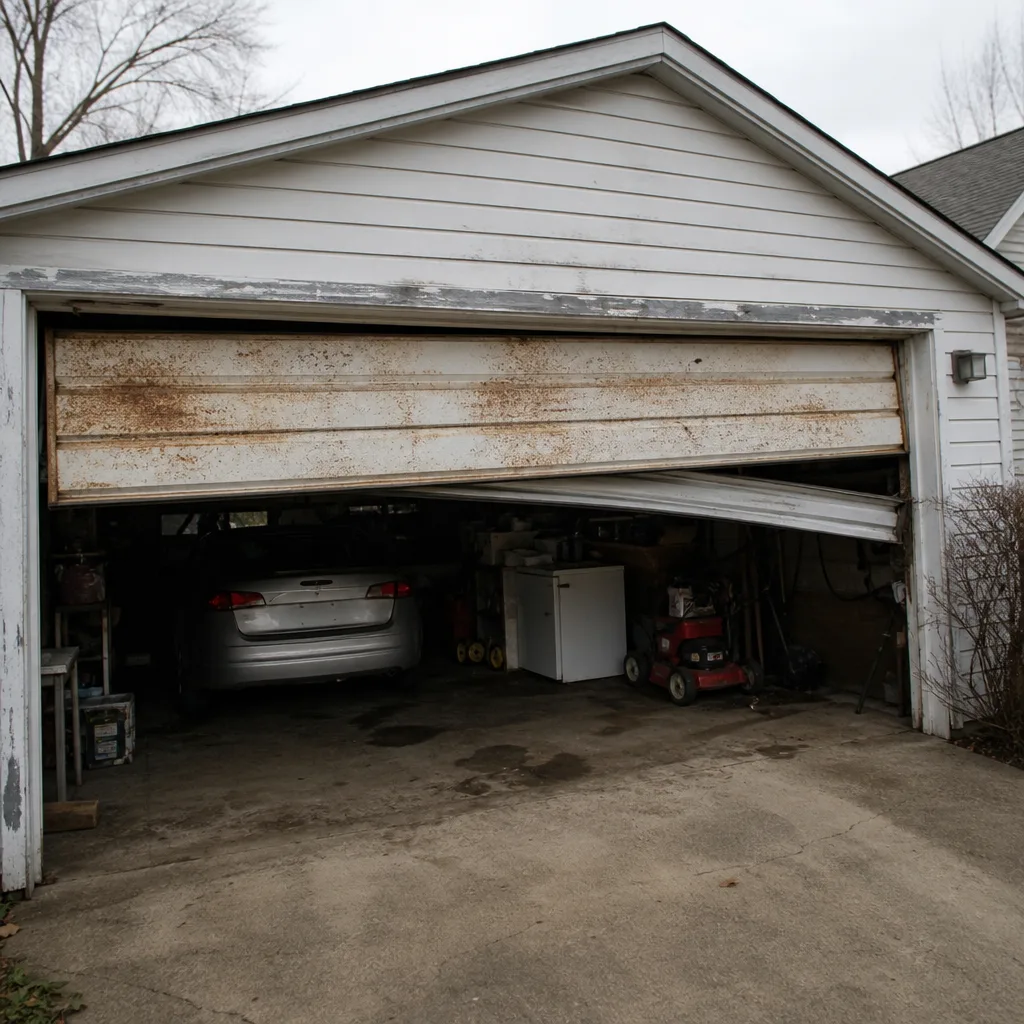 Before
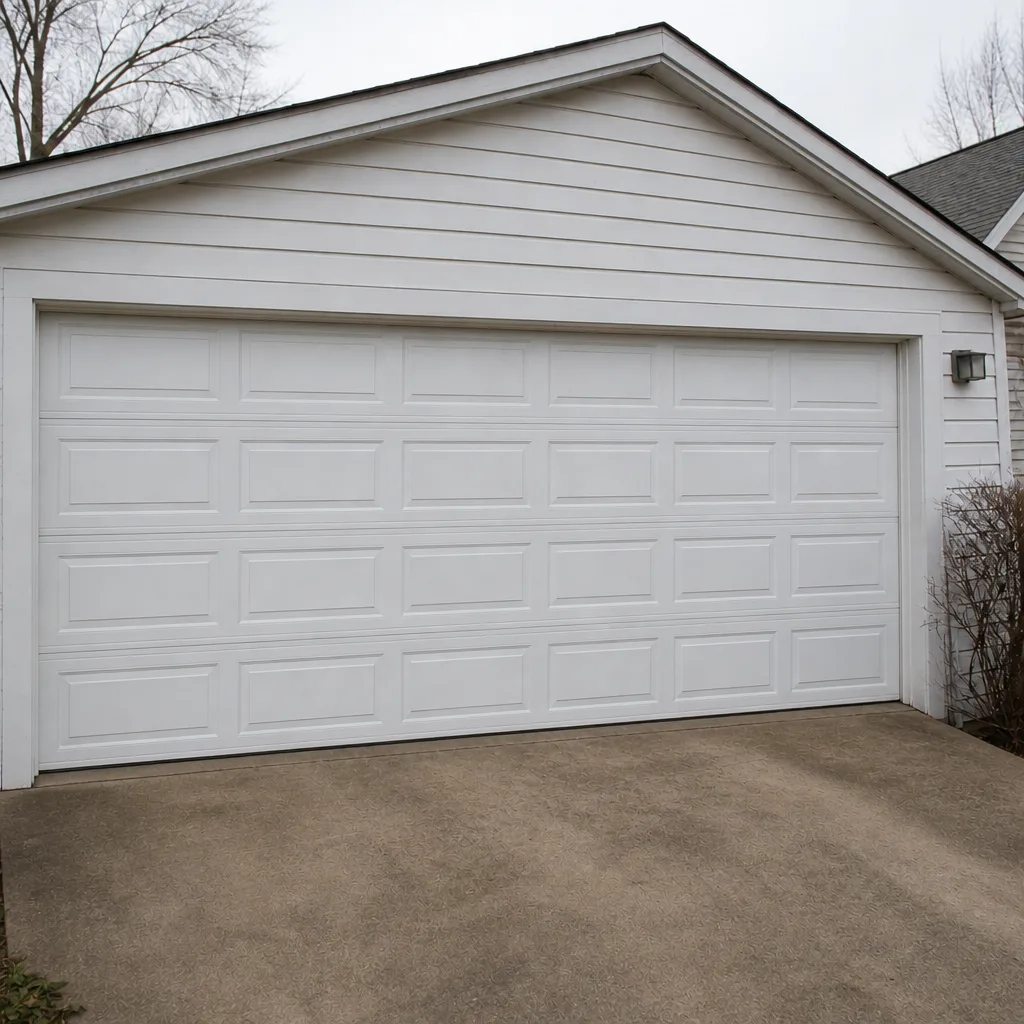 After
When to Call a Professional
Some failures are jobs for a trained garage door pro, plain and simple. Stop and call when the door only opens partway and stops, when a spring looks bent or the door suddenly feels too heavy to lift, when the opener strains and hums without moving the door, when cables are visibly frayed or hanging loose, or when the door is off its track. High-tension springs and cables store enough force to do serious harm, and a door forced open on a broken spring can come down hard. Don’t reach for the tools on those. A trained professional should handle any spring, cable, or track work.
Garage Door Repair Grove City offers free estimates in Grove City. Call (855) 605-4061. We answer 24/7. Fast dispatch from 7am to 7pm, Sunday through Friday, and we’re closed on Saturday. The price is quoted and agreed before any work starts, and the written estimate is what you’ll pay.
Frequently Asked Questions
Ask them to name the brands they service and what parts they typically carry. A specialist names specific manufacturers like LiftMaster, Chamberlain, Genie, Clopay, Amarr, Wayne Dalton, Craftsman, or Raynor, answers diagnostic questions over the phone, and offers a written quote before work begins. A generalist hedges or promises to “come take a look.” Call (855) 605-4061 for a free estimate and ask us the five questions.
No, Ohio doesn’t license garage door contractors as a separate trade, so there’s no single state credential for the work. That means you need to verify specialist skill yourself with the diagnostic questions and confirm the local pro’s insurance. Ask about general liability and workers’ compensation coverage, and ask how many door and opener jobs they handle. Call (855) 605-4061 to get answers from a specialist.
A single spring repair typically runs in the low hundreds, and a matched pair costs about twice that because both springs are replaced together. The specific price depends on your door’s size and spring type, and the written estimate sets the final number. Prices are quoted and agreed before any work starts. Call (855) 605-4061 for a free estimate.
In many cases yes, because we keep common springs, rollers, hinges, and opener parts on hand rather than ordering after the diagnosis. A specialist can usually tell you over the phone whether your repair is a same-day job or needs a scheduled return. Call (855) 605-4061. We answer 24/7. Fast dispatch from 7am to 7pm, Sunday through Friday.
No. The price is quoted and agreed before any work starts, and the written estimate is what you’ll pay. We inspect the door, write the estimate with itemized parts and labor, and you approve it before a technician touches anything. If we find something additional once work begins, we stop and tell you before doing it. Call (855) 605-4061 for a free estimate.
A real warranty separates parts from labor, gives each a defined coverage period, and states plainly what happens if the same repair fails inside that window. Look for a written promise of a no-charge return visit for labor plus the parts coverage terms, spelled out on the quote, not just promised on the phone. Ask before work begins, and get it in writing. Call (855) 605-4061 with any warranty questions.
The Bottom Line
Hiring right in Grove City comes down to asking better questions earlier. Confirm the contractor works on your brand, ask how they diagnose a spring versus an opener problem, and find out whether the parts are on hand or ordered after the fact. Get an itemized written quote with a clear labor and parts warranty, and confirm the price is agreed before work starts. A dedicated garage door specialist answers all of it without hesitation. A generalist can’t. That difference is the whole guide: the right contractor makes a one-visit repair feel routine, and the wrong one turns it into a waiting game. Need the right specialist? Call (855) 605-4061 for a free estimate. We answer 24/7. Fast dispatch from 7am to 7pm, Sunday through Friday.
Written by the team at Garage Door Repair Grove City.